By Stephanie Dobitsch, National Security Expert and Senior Executive at the U.S. Department of Homeland Security
The views expressed in this article are those of the author and do not necessarily reflect the views of the Department of Homeland Security or the U.S. Government. The author writes in her personal capacity.
For more than two decades, America has fought its wars somewhere else. The defining conflicts of this century — Iraq, Afghanistan, and the broader global war on terrorism — were fought on distant terrain by specialized forces, while the rest of the country watched from a comfortable distance. That distance has shaped a generation. Today’s working-age Americans, the millennials and Gen-Z professionals who now run our hospitals, utilities, supply chains, and city governments, came of age believing that war is fought overseas, not something the United States endures at home. That belief is a luxury we can no longer afford.
The next major conflict the United States faces will almost certainly include a contest for the homeland itself, not necessarily by invasion but by a deliberate campaign to break the civilian systems that make modern American life possible. Many experts would argue that these types of campaigns are already underway. Cyberattacks on financial networks; pre-positioned malware in water and electric utilities; disinformation timed to a hurricane; supply chain disruptions that empty pharmacy shelves before a single shot is fired overseas.
Adversaries have studied us carefully. They understand that the fastest way to erode American resolve is not to defeat our military abroad, but to convince the American public at home that the lights, the water, the cash, and the medicine will not be there tomorrow. The gap between our exposure and our preparedness has become a national security imperative that demands a market-led investment strategy, applied now to the resilience of the civilian economy itself.
The Threat Has Compounded, and So Must Our Response
In intelligence work, we describe the modern threat environment as “compounded,” with a single event rarely occurring alone. A cyberattack on a regional bank during a Category 4 hurricane is not two crises — it is one compound crisis, and the effectiveness of the human response degrades exponentially. The Department of Homeland Security (DHS) Office of Intelligence and Analysis has been making exactly this point for years. The 2024 Homeland Threat Assessment warned that adversary threats “interact in complex and, at times, reinforcing ways,” and that natural disasters and technological advances will compound them further. The 2025 Assessment sharpened the warning: nation-state actors, transnational criminal organizations, violent extremists, and malicious cyber actors “at times compound one another in unexpected ways, harming our communities and generating costly disruptions to the U.S. economy.” Intelligence Community assessments this year extend to AI-enabled and agentic attacks moving faster than human defenders can respond. The Intelligence Community is telling us, on the record and in plain language, that the next major homeland event will not arrive cleanly.
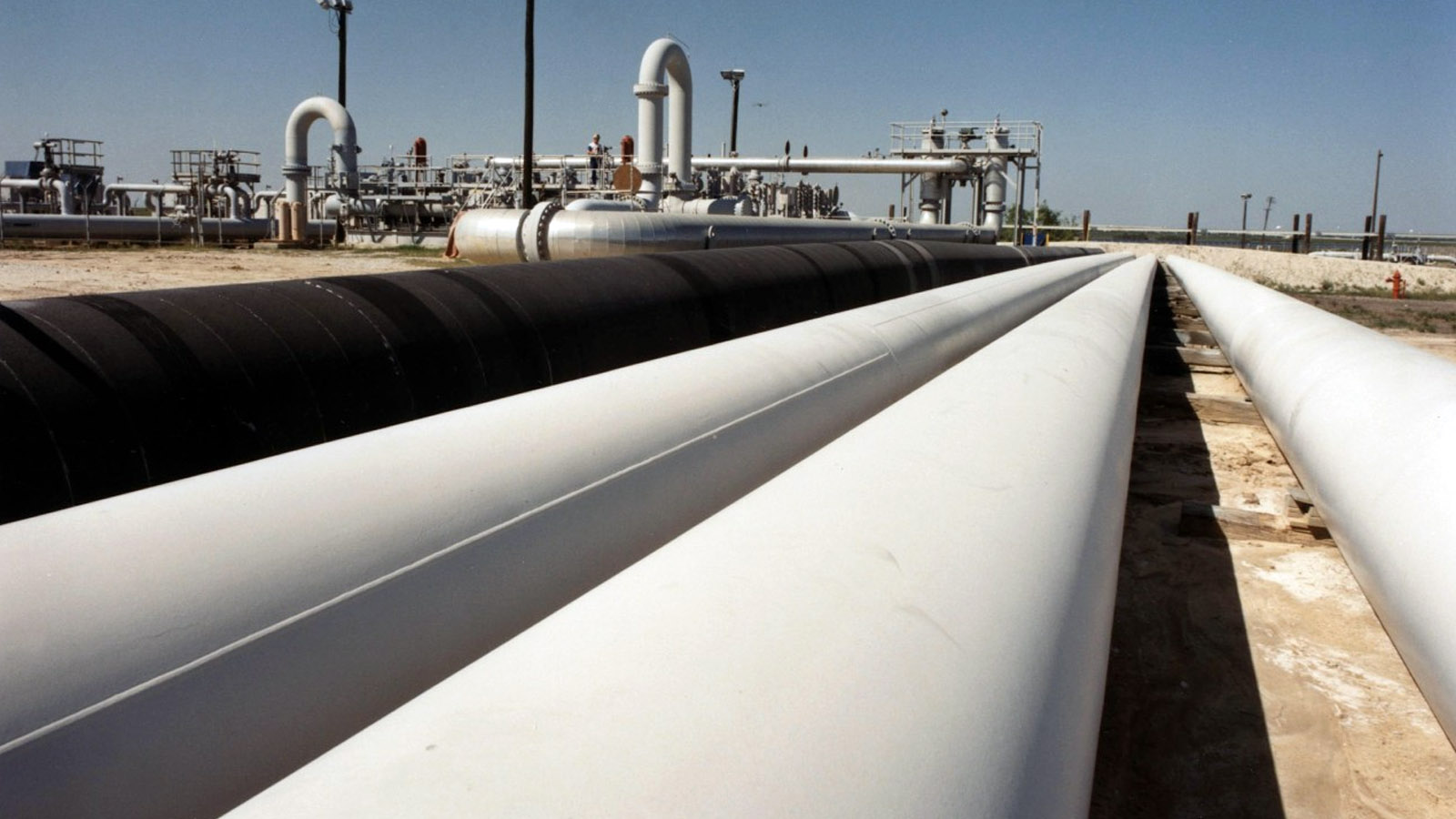
I watched this dynamic up close during my time at FEMA, where every major disaster in the last decade has been complicated by aging infrastructure, brittle supply chains, or a parallel cyber incident no one anticipated. The 2021 ransomware attack on Colonial Pipeline reminded the East Coast how quickly fuel could disappear if a single operator goes down. The 2024 CrowdStrike outage briefly grounded airlines, hospitals, and 911 centers — and it wasn’t even a coordinated attack. In early 2024, pro-Russia hacktivists disrupted multiple U.S. municipal water systems, a small-scale demonstration of intent and capability that DHS flagged explicitly in its threat assessment. That same year, the Change Healthcare ransomware attack — targeting the payment platform that processes roughly one in three U.S. patient records — disrupted prescription fulfillment and claims processing at most of the nation’s more than 70,000 pharmacies, with system outages stretching for weeks. These incidents were not the main event; they were the previews.
Now layer in the civilian reality. A cyber operation against the financial sector freezes payments for 72 hours. According to FEMA’s National Household Survey and corroborating private research, fewer than one in three American households keeps enough cash on hand to get through a week without electronic payment. Fewer than one in five Americans has a backup power source and barely a third has adequate stored water for emergency purposes. Generations ago, schoolchildren practiced “duck and cover.” For many, the emergency plan consists only of a charged phone and an Amazon Prime account.
This is the home front the next conflict will target. Unlike the Cold War, when civil defense was a household topic and shelter signs were posted on public buildings, we have no shared cultural muscle memory for preparedness. Most of the working population’s frame of reference for war is 9/11, a catastrophic but geographically contained event followed by decades of expeditionary fighting that demanded almost nothing of civilians beyond a yellow ribbon.
The Defense Production Act Is Not Just for the Pentagon
The good news is that the legal and institutional architecture for civilian resilience already exists. The Defense Production Act (DPA) of 1950, born of the Korean War mobilization, has been quietly expanded by Congress over 75 years to do exactly what this moment requires. The DPA now defines “national defense” to explicitly include emergency preparedness, homeland security, and critical infrastructure protection and restoration. Title I of the DPA lets the federal government prioritize private contracts for materials essential to civilian survival, not just military operations. Title III authorizes loans, loan guarantees, and direct investment to build and sustain domestic productive capacity for everything from pharmaceuticals to rare earths to industrial chemicals.
But authority on paper is not capability on the ground. GAO has documented for years that civilian agencies underuse DPA Title I, lack the policies and guidance to apply it under stress, and have not institutionalized the lessons the Department of War learned from decades of Title III investment. The COVID response laid this bare. We discovered how deeply U.S. medical supply chains depended on a single strategic competitor: a Department of Commerce study cited in congressional testimony reported that 97% of U.S. antibiotics came from China, with roughly 80% of active pharmaceutical ingredients sourced from China and India combined. The Intelligence Community has continued to flag these dependencies as a deliberate vulnerability, identifying the People’s Republic of China’s predatory economic practices — market manipulation, coercive economic tools, economic espionage, and illicit technology acquisition — as a sustained campaign to advantage Chinese firms over ours and to keep U.S. supply chains dependent on Beijing. The United States has responded with executive orders, emergency contracts, and a national conversation about supply chain resilience. While we have made progress in semiconductors and a handful of critical minerals, progress almost everywhere else has lagged.
The same instrument we used to surge ventilator production is the instrument we should be using now, in peacetime, to build civilian-grade resilience at scale. The DPA’s expanded authorities are a market-shaping tool, not just a wartime lever. Used deliberately, they can pull private capital into exactly the categories organizations such as the Council on Global Competition and Innovation – CGCI have identified as strategic: domestic pharmaceutical manufacturing, grid-hardening equipment, water treatment systems, secure communications, and the industrial control system cybersecurity that protects all of it.
What Civilians Need the Military Cannot Always Provide
Anyone who has led a disaster response knows that state and local governments rely on military assets — National Guard rotary aviation, Title 10 logistics, Army Corps engineering — as the default backstop when civilian systems fail. That arrangement works when the threat is geographically bounded, and the rest of the country can surge in. It does not work in a scenario where the military is fully committed to a major overseas contingency, or worse, defending forward in the Indo-Pacific. The implication is unavoidable: the civilian economy must be capable of absorbing and recovering from a sustained attack with substantially less direct military support than current plans assume.
This requires investment shifts that align with a market-led framework.
First, civilian critical infrastructure must be treated as a national security asset, with the same capital intensity and investment discipline. Water utilities, regional grids, hospital systems, and community banks are the targets adversaries have already mapped. They are also overwhelmingly owned and operated by the private sector and are underfunded and unprepared for the threat they face. DPA Title III incentives, paired with public-private investment vehicles, can pull institutional capital into infrastructure hardening at a scale federal grants alone will never reach. The financial markets have demonstrated they will fund resilience when the policy framework rewards it.
Second, the medical and industrial stockpiles must be rebuilt not as inventory, but as latent manufacturing capacity. Stockpiles run out. Domestic capacity, properly incentivized through Title III purchase commitments and long-term offtake agreements, does not. The lesson of COVID was not that we needed bigger warehouses; it was that we needed factories we could call on. Five years later, the question I keep asking is whether we have actually invested in the places where we were caught short and, equally important, whether we are investing in known vulnerabilities for the future.
Third, individual and community preparedness must be re-normalized as a civic responsibility, not a fringe concern. This is not about prepper culture. It is about the basic competence a free society needs to absorb shock without panicking. A week of cash, a week of water, a charged radio, a neighborhood plan, and communities able to function for 48 hours without instant connectivity — these are achievable goals, and the federal government can lead the conversation without paternalism. FEMA’s preparedness data shows that awareness drives action: people who received preparedness information in the prior year were roughly five times more likely to take three or more preparedness actions than those who had not.
The Investment Case
An animating insight in current national security and economic debates is that great-power competition will be won or lost in the capital markets as much as on the battlefield, and that aligning private investment with national security imperatives is the strategic task of the decade. Homeland resilience belongs squarely in that framework. The same investors who are now backing semiconductor fabs, critical minerals projects, and defense-tech ventures can — and should — be deploying capital into the civilian backbone the country will need when the next crisis arrives. The policy tools exist. The legal authorities exist. The threat is documented. What has been missing is the strategic clarity that resilience at home is not separate from competitiveness abroad; it is the precondition for it.
A nation that cannot pay its bills, light its homes, or fill its prescriptions for a week is a nation that cannot sustain a long competition with a determined adversary. The military will fight where it must. But the home front is where the next war will be won or lost. It is time to invest accordingly.
About the Author
Stephanie Dobitsch spent more than 15 years in the Intelligence Community, serving in multiple agencies and in a variety of roles. Most recently, she served as the Deputy Under Secretary for the DHS Office of Intelligence Analysis, where she led the development and release of the Department’s annual Homeland Threat Assessment. At FEMA, she directed the national preparedness mission, represented the agency with NATO and international partners, and coordinated government-wide implementation of the Defense Production Act across civilian agencies. Stephanie has extensive expertise in Middle East affairs and recently obtained her MBA from Georgetown University.