By Mark Pascale, Director, The Intelligence Project at Harvard’s Belfer Center
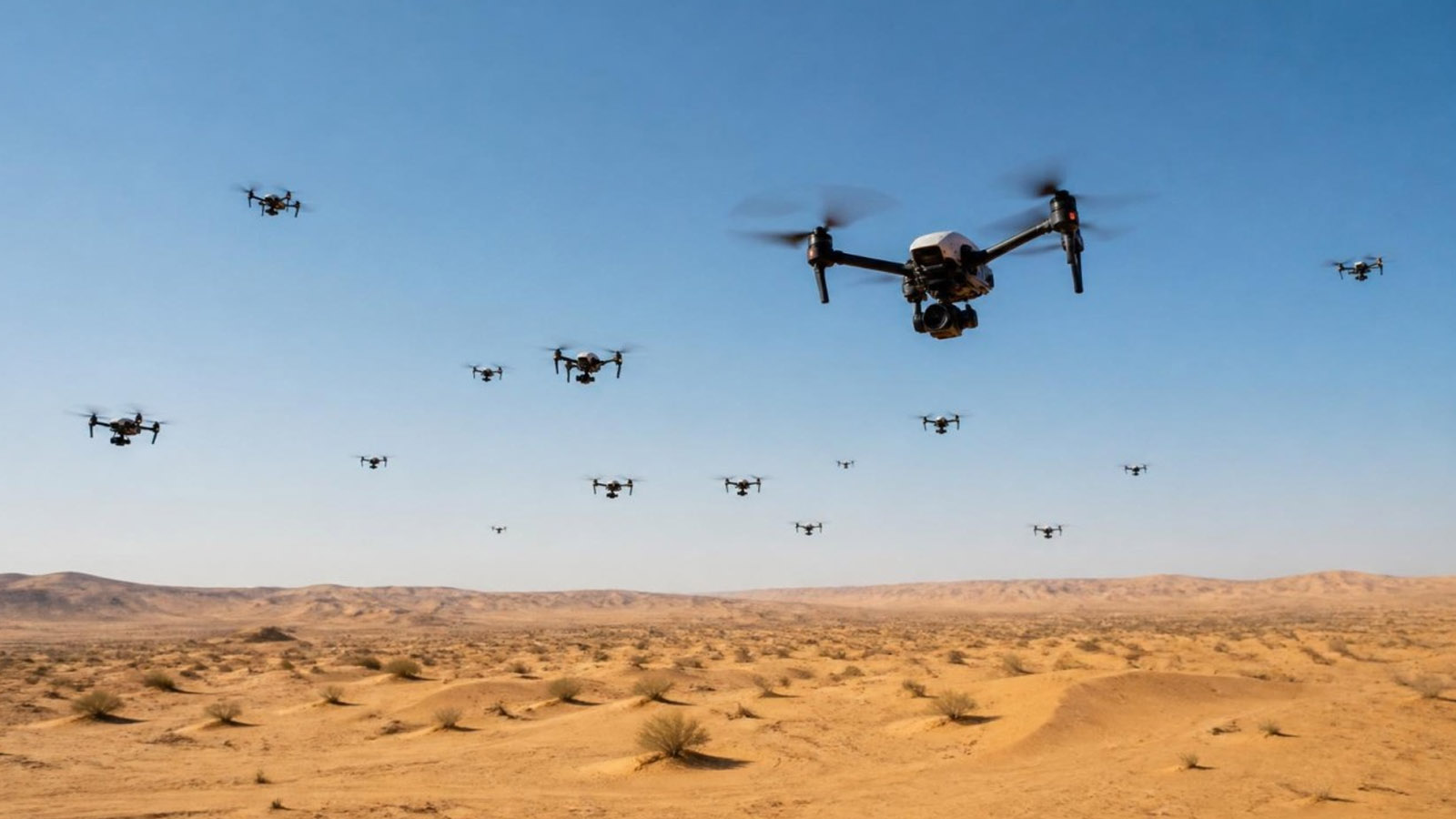
A revolution is underway across the national security domain. A historic, enduring revolution being driven by new technologies that permeate nearly every aspect of this space. The convergence and confluence of multiple technologies being developed and deployed in near real-time is a bit like the Oscar winning movie “Everything Everywhere All at Once”.
Unlike other humanity-altering inventions such as the printing press, gunpowder, and electricity, which required decades if not centuries for global adoption, the speed and scale of today’s revolution rewards those able to act and engage first. The opportunities are as expansive as the pace of change is rapid.
The dual-use nature of nearly every technology transforming the national security space augments both the potential and the challenges of smartly mitigating risk. Materials science, synthetic bio, satellites, quantum, robotics, autonomous systems and of course AI will impact the average consumer as much as they will forever change the way a soldier or intelligence officer executes Mission.
The vanguards of today’s innovation are individuals like Anduril founder Palmer Luckey who grew up using the beta versions of today’s cutting-edge technologies. Some of the most competitive drone companies are founded by champion gamers who mastered the joystick and FPV mindset. Indeed, the paradigm has shifted from the Silicon Valley of the 1960’s subsidized so heavily by Government commissioning.
Working with a handful of U.S. military veterans from Harvard Business School and MIT Sloan School of Management, I helped support the establishment in 2024 of a dual use national security technology incubator uniting student founders from across the Harvard and MIT ecosystems. We were brought together by our shared conviction that the U.S. and its allies needed to move with greater alacrity in adopting and integrating the cutting-edge technologies redefining the defense and intelligence space. All of us, in our own ways, had witnessed the tragic cost in human life of failing to have the best technology available on the front lines of national security.
Nearly two years into this experiment called QLab, the demand signal from both the market and the innovator has been compelling. The inaugural 2025 QLab cohort worked across the range of solutions and capabilities: cognition-based predictive AI, space, autonomous systems, manufacturing, to name a few. Of the 16 inaugural QLab Teams, eleven quickly received pre-seed support and two garnered Palantir Fellowships. The second cohort of 2026 saw a boom in applicants – nearly 100 from across the Harvard and MIT founder populations.
Participation in QLab—an independent, student run non-profit—provides founders a greater appreciation for how their products apply to the national security space. Enabling early partnerships between the startup and government stakeholders drove rapid iteration against real national defense problems. Many QLab Teams now work closely with the U.S. Government and major defense contractors. Illustrative examples include:
- Diffraqtion: MIT Grad Johannes Galatsanos partnered with the Defense Advanced Research Projects Agency (DARPA) to build quantum cameras that enable satellites to see at 20x higher resolution and 1000x faster processing.
- Bandelier Technologies: Founded by Harvard Business School MBA and former U.S. Army Special Forces Green Beret, Stephen Buchanan. Bandelier is commercializing quantum sensing technology developed with Los Alamos National Laboratory. Initially supported by federal research funding, the technology is being transitioned toward operational and commercial use.
- CollarID: Patrick Chwalek of MIT Media Lab is developing a tracking device originally designed to monitor animals and their environment. The sensor suite captures sound, temperature, humidity, particulate matter, and gas along with full movement data.
- ProDex Labs: Harvard undergrads Kushan Weerakoon, Rick Li, and Sean McCabe build AI software to optimize factory operations with direct relevance to the modernization of the US defense industrial base—a critical pillar in ensuring U.S. competitiveness on the world stage.
Perhaps the most notable aspect of this experience has been the commitment and passion evident among the student founders—a genuine desire to contribute to national security, no more or less than my own resolve to join the CIA over 20 years ago.
Programs like QLab accelerate diffusion of critical technologies by putting founders, defense customers, and end users in the same room week after week, creating a feedback loop that compresses what traditionally takes years of bureaucratic navigation into months of direct iteration. Across just two cohorts and 34 teams, QLab founders have raised approximately $45M in venture capital, secured over 10 government contracts, closed 20 pre-seed and seed rounds, and earned multiple acceptances into Y Combinator. But faster technology development alone does not guarantee adoption at scale.
The dual-use sector increasingly requires capital partners who understand both the commercial opportunity and the national security imperative, investors willing to navigate dual sales cycles and classified requirements alongside the enormous market potential. Matching the right technology with the right capital is now as critical as matching it with the right mission.
To sum up the moment we’re in, I’ll harken back to my study of the Mandarin language. The two characters that form the word commonly translated as crisis are ‘wei’ 危 , meaning instability and risk, and ji ’机, meaning a moment of change or opportunity. The investment opportunities in the dual use national security space right now are precisely a combination of risk and opportunity, with a lion’s share of the risk absorbed by those who fail to embrace this moment of change. And the rewards destined for those who seize the plethora of opportunities fundamentally transforming the national security domain as we currently know it.
About the Author
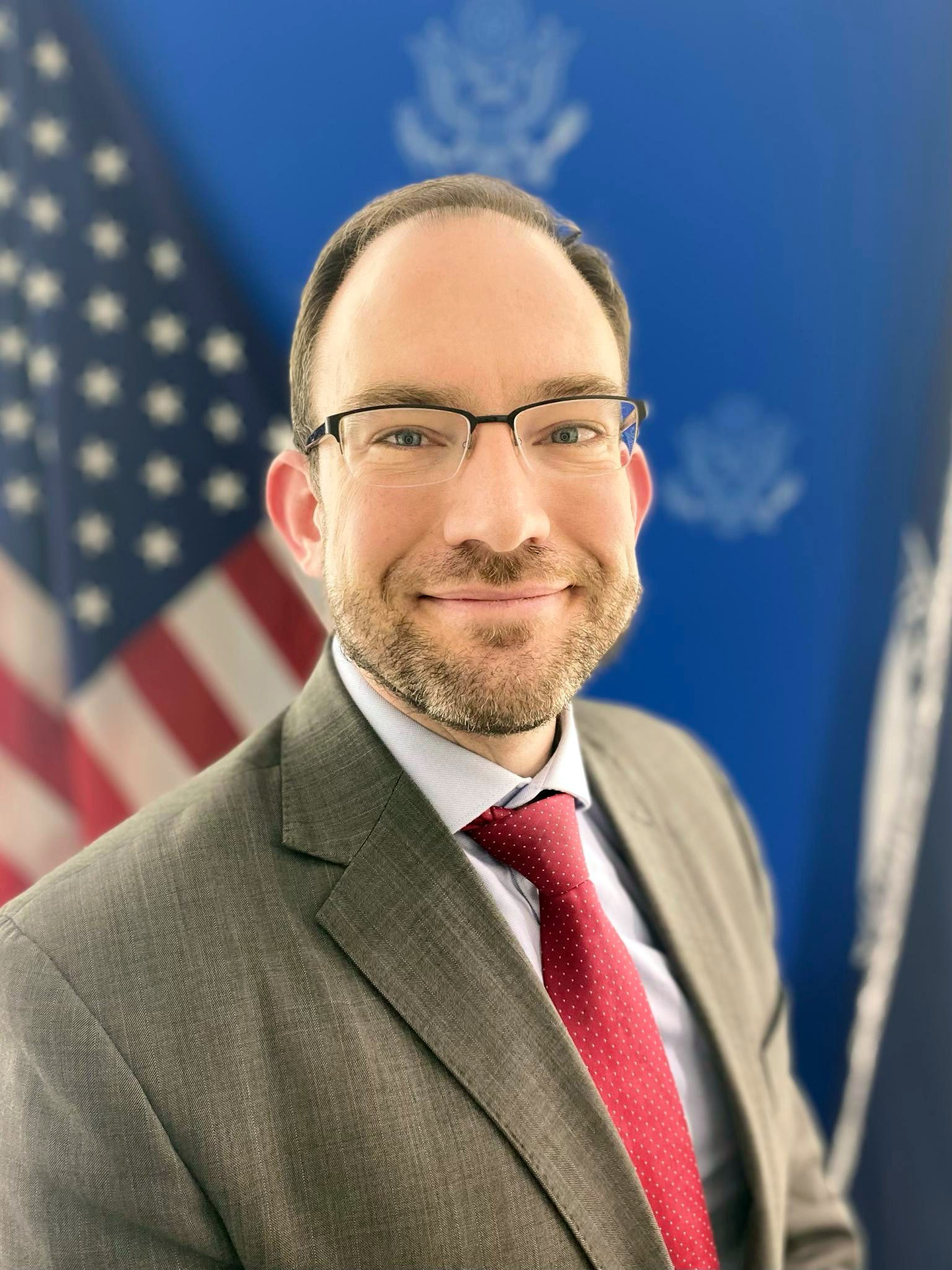
Mark Pascale is Director of the Intelligence Project at the Harvard Kennedy School Belfer Center. Mark served in the CIA for more than 20 years, to include as a multi-time Chief of Station. He speaks Russian, Arabic, and Mandarin and spent 14 years of his adult life in China, Russia, and Syria.
https://www.belfercenter.org/person/mark-pascale#:~:text=Mark%20previously%20had%20a%20distinguished,China%2C%20Russia%2C%20and%20Syria.