By Graham “Gray” Chynoweth, Founder, The Next Offset, and Council on Global Competition and Innovation – CGCI, Council Member
On December 26, 2025, China’s State Council announced a 20-year national venture capital guidance fund targeting strategic emerging industries—including integrated circuits, artificial intelligence, quantum technologies, aerospace, biomedicine, and brain-computer interfaces. The announcement was brief, technical, and easy to miss.
It shouldn’t have been.
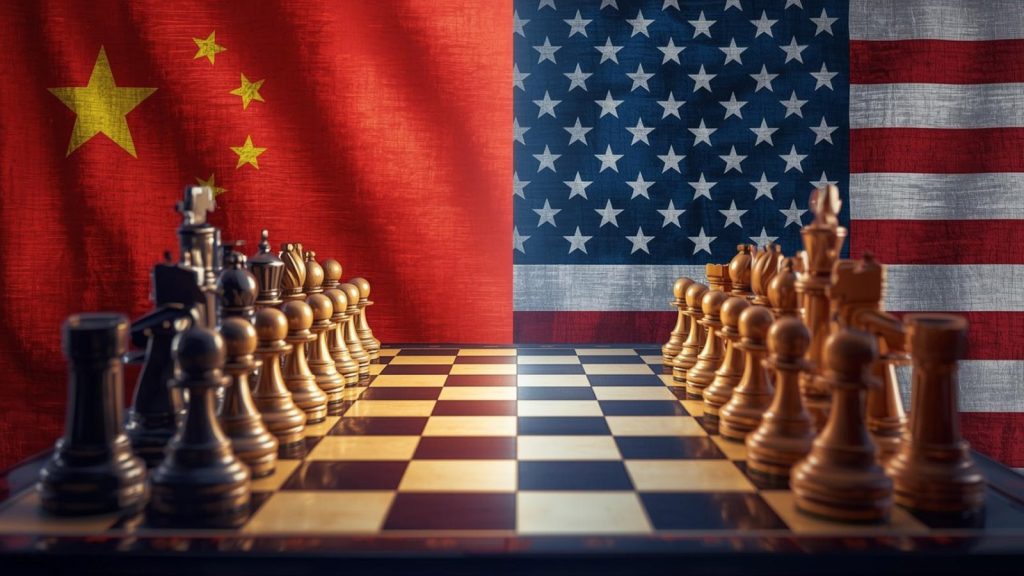
When you are on the field, the other team calls plays too. This is not simply a story about Chinese industrial policy. It is a reminder that rivals do not passively absorb pressure—they adapt, reallocate, and reshape the terrain. The competition gets a vote in how the contest unfolds.
The U.S. response to China’s technology ambitions has focused, rightly, on denial and constraint. The October 7, 2022 semiconductor export controls—expanded on October 17, 2023—were the most sweeping technology transfer restrictions in a generation. Treasury’s outbound investment regime, finalized in October 2024 and effective January 2025, extended that logic to certain capital flows—though the America First Investment Policy has since signaled it may be reviewed and expanded further. These are serious instruments, seriously deployed. But Beijing is not absorbing the pressure passively. It is engineering around it—and the 20-year venture capital fund is the clearest public signal yet of how.
Understanding the fund requires understanding its strategic logic. Scholars Elsa Kania and Lorand Laskai have documented how military-civil fusion (MCF) is a systemic restructuring of China’s innovation ecosystem—designed to eliminate barriers between civilian R&D and PLA modernization so that breakthroughs in AI, quantum, and advanced manufacturing flow across the civilian-military boundary. The fund’s 20-year horizon, explicitly structured to absorb early-stage risk and anchor patient capital in dual-use sectors, is a direct institutional embodiment of that logic. As Barry Naughton’s 2025 USCC testimony frames it: China has spent years building mechanisms to steer capital and re-engineer its innovation chain toward security-defined outcomes. This fund is a continuation, not a surprise. Zongyuan Zoe Liu adds the financial statecraft dimension—long-duration capital mobilization is also a form of sanctions-proofing, building the industrial depth to outlast external pressure. The 20-year time horizon is a strategic choice, not an accounting preference.
Here is what should sharpen our focus: China’s vote for 20-year planning is also a structural vulnerability. We are living in a hyper-dynamic competitive environment where the landscape can shift fundamentally in two years, let alone twenty. Predicting which dual-use technologies will define military advantage in 2045 is not a tractable investment problem—it risks locking capital into yesterday’s priorities at enormous scale. As CGCI has argued in Jake Guglin’s “American Leverage” and Michael Brown’s “The Battle for Global Technological Leadership,” the United States has ceded ground in production capacity—but its structural advantage lies precisely where central planning is weakest: speed, iteration, and the capacity to adapt.
The United States should not respond by imitating centralized, long-horizon direction. We should respond by casting a different vote—one built on structural dynamism: a posture that prizes iteration over prediction, deploys every instrument in the economic toolkit, and continuously leverages American strengths to compensate for American weaknesses. This is not a call for bureaucratic expansion. It is a call for reallocation toward impact, removal of execution friction, and a demand for measurable results.
The path forward has three components.
1. Deny and Slow: Keep Chokepoints Tight and Adaptive
Export controls and investment screening remain the foundation. The BIS semiconductor controls and Treasury’s outbound investment regime have imposed real costs on China’s ability to access frontier chips and dual-use capital. These tools must stay current with China’s workarounds—including its pivot toward advanced semiconductor packaging, where Emily de La Bruyère’s 2025 USCC testimony documents China’s substantial and growing global share, enabling capability gains without the most advanced fab tools.
The Pentagon’s Open Price Exploration for National Security (OPEN) AI program—a DARPA initiative now being deployed to set reference prices for germanium, gallium, antimony, and tungsten within a proposed global minerals trading bloc—illustrates what adaptive denial looks like in practice. By calculating what a critical mineral should cost once Chinese market manipulation is factored out, and pairing that with adjustable tariffs, the administration is deploying AI as an instrument of economic statecraft. It is exactly the kind of creative, cross-instrument tool use the moment demands.
2. Build and Mobilize: Deploy the Full Toolkit at Speed
Denial alone is insufficient. The second component is active mobilization—using every available instrument to build domestic capacity faster than China can route around constraints. Every tool belongs on the table: debt, equity, procurement guarantees, strategic stockpiling, regulatory modernization, and sanctions. As @Nicholas Hanson and Madeline Field argue in “Economic Statecraft Is Back. Is America Ready?” (War on the Rocks, January 2026), the United States still lacks a whole-of-government economic statecraft doctrine—and that gap is costing execution speed.
The Office of Strategic Capital (OSC) is demonstrating what patient debt capital can do. Its first direct loan—$150 million to MP Materials to add heavy rare earth separation capabilities at Mountain Pass, California—was followed by a $700 million conditional commitment to Vulcan Elements and ReElement Technologies to scale domestic neodymium-iron-boron magnet production. Backed by up to $100 billion in lending authority from the One Big Beautiful Bill Act, OSC is building the “architecture of reliable investment” that private markets alone have been unwilling to finance. These are not subsidies—they are demand signals that unlock private capital at scale.
Strategic stockpiling is the complementary instrument. The Pentagon moved to acquire up to $1 billion in critical minerals in 2025, with the National Defense Stockpile Transaction Fund receiving $2 billion and the Industrial Base Fund $5 billion under the One Big Beautiful Bill Act—including explicit authority for equity positions, as illustrated by the $400 million DoW stake in MP Materials paired with a 10-year price floor offtake at $110/kg for neodymium-praseodymium. Emily de La Bruyère’s warning has never been more concrete: Beijing has already weaponized germanium, gallium, and rare earth export controls to force Western rivals to close. Stockpiling and supply-chain investment are not defensive postures—they are deterrence.
The Defense Innovation Unit (DIU) is the procurement and adoption accelerator. Since inception, DIU has facilitated over $4.9 billion in production contracts across 48 companies backed by $20 billion in private investment—compressing what used to take years into 12–24 months. Recent examples span the full dual-use spectrum: Anduril’s counter-UAS Lattice platform; Shield AI’s autonomous reconnaissance drones; Applied Intuition’s platform for Army robotic combat vehicles; and Project FORGE—a $32.6 million contract with Velo3D using additive manufacturing to break critical munitions production bottlenecks. DIU’s Hybrid Space Architecture project is integrating commercial satellite constellations from Amazon Kuiper , Palatir, Google, and others into a unified military communications network. These are not pilots—they are production-track programs deploying at commercial speed.
3. Align and Coordinate: Give Institutions the Mandate and Flexibility to Win
The third component is institutional. The tools exist. The gap is authority, coordination, and flexibility. As Hanson and Field identify, the Defense Department has emerged as a potential coordinating agency on economic security—but without a defined mandate from Congress or the White House, its impact is constrained. The proposed Economic Defense Unit (EDU)—which did not survive the final FY2026 NDAA—represents exactly the coordination architecture needed: a mechanism to align OSC’s financing, DIU’s procurement speed, and the traditional instruments of financial statecraft (CFIUS, BIS, Treasury sanctions) into a coherent whole-of-government effort. Its absence from the final bill is a gap worth revisiting.
What OSC, DIU, and a future EDU need is not new bureaucracy—it is fewer seams, consolidated authorities, and cross-instrument flexibility. An OSC constrained to a single instrument type, a DIU without binding procurement commitments, or an EDU without enforcement authority are institutions fighting with one hand tied. The reform agenda underway in the Department—streamlining, cutting friction, demanding execution—points in the right direction. The next step is giving these actors the mandate and flexibility to operate at the pace the competition demands.
Speed also requires clear rules of the road set by democratic institutions—not by vendor contracts or inertia. Regulatory modernization is not deregulation for its own sake; it is a force multiplier. Procurement guarantees are not subsidies; they are the demand signals that unlock private capital. And by most measures, U.S. capital markets are many times larger than China’s—a structural advantage that central planning cannot replicate. The question is whether we organize public tools to catalyze the private capital that already exists, at the speed the competition demands.
Long before “military-civil fusion” became Washington shorthand, PLA strategists Qiao Liang and Wang Xiangsui argued in Unrestricted Warfare that the arena of competition is partly chosen by the competitor—that trade, finance, and technology can function as strategic instruments. China’s 20-year VC fund is a vote for a particular kind of contest: long-horizon, patient, and organized around institutional depth.
The United States should cast a different vote—for speed, adaptability, and the full weight of its market-driven innovation system, backed by every instrument of statecraft available and disciplined by a demand for results. Not a 20-year plan. A system built to win every year, on every front, faster than the world around it changes.