By David Stuckenberg, Ph.D., MPS, Lt. Col. USAF, CGCI Council Member, Program Director PROJECT TRANSCENDENCE, President and COO Genesis Systems® (USA) – Water Your Way
The opinions expressed are those of the author alone and do not represent the official views of the U.S. Government or Department of the Air Force.
Water is the economic potential energy of a nation. Once converted to work, water becomes kinetic energy, unlocking both economic health and growth. But water is more than economic power—water security is national security, and access is a human right essential for the preservation of life.
Without water, all meaningful life and economic activity cease in a matter of days. Notwithstanding water’s fundamental importance, almost no modern nation is water-secure, apart from a handful of European states and Singapore. While much has been said of water’s critical role—from preventing future wars to ushering in the next Silicon Valley—overall, remarkably little capital has been allocated to the water sector. The footstones of our modern age are literally falling apart.
Over the last two decades, U.S. infrastructure and industries dependent on water have expanded exponentially, even as primary water sources have become overwhelmed and, in many regions (such as California and Texas), are nearing exhaustion.The same can be said for much of the world.
The economic consequences of this U.S. and global reality cannot be overstated. In economic terms, the current condition is analogous to a market that recognizes automobiles require fuel. Investors rush to build thousands of filling stations along highways—with little to no thought about increasing refinery output or fuel transport capacity to ensure the stations have gas to serve. In sum, without water, there can be no inventory, digital or tangible.
Our window to make the right investments to prevent economic catastrophe is rapidly closing. Warren Buffett was right all along: “Be in the essentials business.” It is time to remember what is essential.
Ten years ago, while flying combat missions from Al Udeid Air Base in Qatar, I noted a curiosity from my cockpit window: hundreds of water tank trucks lined up as far as I could see. Some of the last groundwater in the nation was being pumped out for irrigation. The writing was on the wall—full dependency on desalination was around the corner. A single water supply for a nation of 3.5 million people represents, in strategic and military terms, a significant risk for single-point failure or attack.
Today, the right investments mean allocating capital and making commitments necessary to avoid pulling on the common thread(emphasis added) that, according to the eminent professor and anthropologist Dr. Eric Kline, has contributed to the failure of all civilizations great and small. That means not only making supplies and infrastructure more resilient but also finding and adding new water sources.
As an indicator of the enormous gap between water and other technology investments, in 2024 the U.S. invested over $110 billion in artificial intelligence (AI) (Stanford HAI, 2025), while water investments totaled just $600 million(White & Case, 2025)—a mere 5% of AI investment. Ironically, AI infrastructure itself requires enormous amounts of water to cool the data centers powering it. We seem to be building the future on sand. If you don’t believe it, look at the water supplies under the U.S. breadbasket. They are rapidly depleting from irrigation pumping.
According to peer-reviewed literature, an estimated 4.4 billion people—half the world’s population—currently live in water scarcity. Water scarcity arises when the amount of water required exceeds what is available for hydration, health, and hygiene. Some estimates suggest that by 2050, up to 80% of the world’s population may experience water scarcity. From my personal visibility into water realities across more than 60 nations, making investments in water is no longer about understanding the competition—it is a race against conditions that threaten the stability of nations worldwide. And which threaten to kill millions from famine.
Beyond scarcity, humanity is entering a phase of hyper-competition and security crises, where limited freshwater supplies have also become instruments of economic necessity, political control, and gray-zone warfare. State and non-state actors increasingly use water as leverage to achieve outcomes above and below the threshold of war. Based on AI data collected to understand future instabilities arising of scarcity, university studies indicate over the next 10 years, water driven conflict will likely rise more than 70 percent.
Despite its centrality to civilization, freshwater’s value in modern society has long been relegated to background discussions. Even in Monopoly, Water Works is one of the least valuable assets. The most common question I hear from those unaware of water scarcity is: “Water is free right?” Yet the cost of water is rising rapidly, approaching the cost of electricity in many areas. In Tampa, Florida, my water bill is often $700 per month, and my family is careful with usage. The age of low-cost water has ended. Water is now a major cost of doing business and life—if it can be obtained at all in some locations.
Economist Willem Buiter predicted this reality over a decade ago, noting, “Water as an asset class will, in my view, become the single most important physical-commodity-based asset class, dwarfing oil, copper, agricultural commodities, and precious metals.” Next to air, the value of water far exceeds what most nations and economies acknowledge—because it is taken for granted. According to Global Water Intelligence, from now until 2030, water is projected to become the number-one investment theme, growing from $12 trillion to $30 trillion annually.
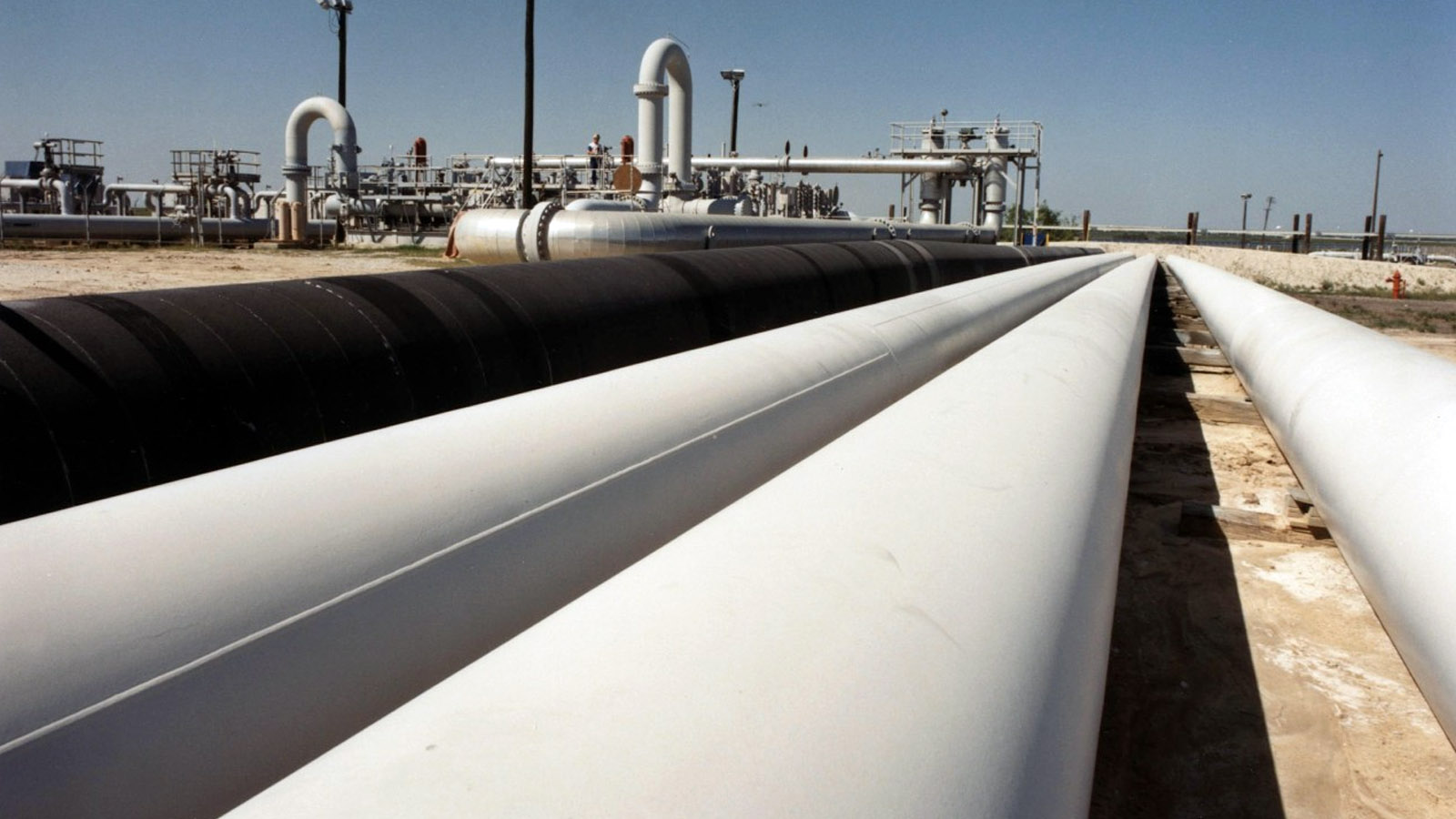
After decades of underinvestment and stagnation, centralized water distribution systems—rooted in Roman-era concepts—are failing us. Soaring capital, maintenance, and subsidization costs, coupled with climate change, cyber-attacks, and increased demand, are amplifying vulnerabilities around nearly all finite freshwater supplies. Meanwhile, the “slow side” of the water cycle (water taken from lakes, rivers, and aquifers) is under deep stress, while the “fast side” (atmospheric water) is finally entering viable technological consideration.
This once quiet global crisis is becoming deafening. In water-scarce regions such as the Middle East and North Africa, state-provided water is expected, heavily subsidized, and consequently wasted—further straining governments as they attempt to increase prices. In Texas, water regulators and utility advocates have publicly warned that unless more water is found, “The Texas Miracle”—a term for the state’s economic boom—will end. The race is on to find sustainable solutions, but innovation remains stagnant. As a result, efforts to lockup water rights have become frenzied. But there is no guarantee water withdrawals will be allowed. The old model is coming apart.
Part of the problem lies in perception. Many policymakers and investors view water technology as static—low-margin, incremental, and too slow to innovate. These views, often reinforced by entrenched incumbents, protect oligopolies while stifling innovation. Yet new technologies are emerging that go beyond disruption. They can make some current water constructs obsolete. By creating a new global marketplace led by the United States, U.S. innovation can once again drive industrial transformation, as it did with telecommunications and computing.
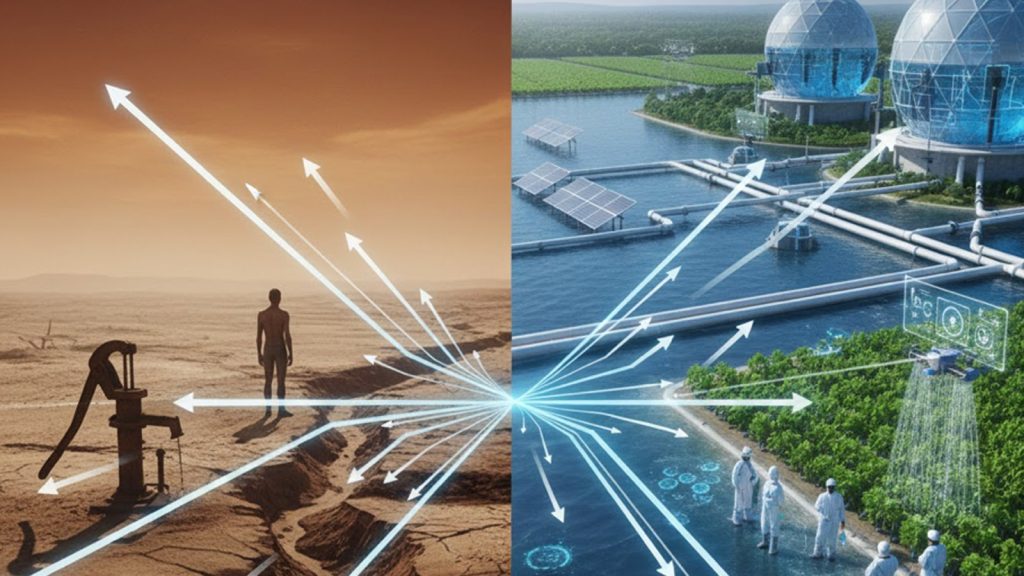
A new class of infrastructure called Uninterrupted Water Systems (UWS) is now emerging. Developed through cooperation between defense and industry, this high-efficiency dual-use technology is already in use at hospitals, military installations, data centers, and homes around the world. UWS systems harvest water directly from the atmosphere to create utility-scale water supplies up to millions of gallons a day—drawing from an estimated 37 quadrillion tons of water in the air, equivalent to 600 billion EPCOT spheres cycling through the atmosphere every ten days. These systems increase resilience, eliminate the need for disruptive trenching or piping, and enable secure, federated data networks protected by quantum encryption. Some are hardened against electromagnetic pulses and geomagnetic storms. One design being fielded by the military can generate water that exceeds EPA purity standards by 100 times even in a nuclear or biological contaminated environment.
The ability to create networks of “water routers”—federated production nodes of atmospheric water—is already here. Just as the Federal Communications Commission once facilitated the rise of digital communications by licensing cellular frequencies, a similar framework could foster the creation of a global distributed water network powered by renewable energy and space-based solar generation. Air is the new media for water transport and collection.
It is time to not only embrace change but recognize that humanity requires it. Legacy constructs can no longer sustain the burden ahead. It is estimated that by 2050 water demands will rise by another 50 percent (Organization for Economic Co-operation and Development, 2012). Recent studies indicate the decades old forecast is materializing.
We must break from the paradigms of the past and embrace what is possible—and what is necessary for our health and security.
U.S. companies currently lead in UWS technologies, but China and other competitors such as India are racing to catch up. In 2024, Genesis Systems debuted the world’s first full-home water generator that produces the entire water supply from air winning at the Consumer Electronics Show. By 2025, more than 90 Chinese companies were attempting to produce or import similar systems and knockoffs. The risks of embedding foreign hardware in critical U.S. water infrastructure are real. With micro-chips a backdoor is required under Chinese law; it will be the same with air to water supplies.
As former FBI Director Christopher Wray warned, “The PRC has made it clear that it considers every sector that makes our society run as fair game in its bid to dominate on the world stage… to induce panic and break America’s will to resist.” The race to secure the world’s future water supplies—like the race to secure 5G—is already underway. America must lead. And now!
The health, prosperity, and stability of all civilizations—past and present—have been tied to their water supplies. The inefficiency of current water management systems requires bold investment and new thinking to safeguard the rules-based global order. We cannot continue doing what has been done since antiquity and expect different results. To do so has a clinical definition.
Without leadership and decisive action, water scarcity will lead to economic and societal collapse somewhere—and it would not be the first time. We cannot gamble with America’s future. Our best option is to create the possible, by embracing a wholistic an understanding of present realities and to implement smarter and better technologies with resilient, sustainable, and federated designs.
Note About the Author:
Dr. David Stuckenberg is a U.S. water industry leader and national security expert in the field of gray zone and hybrid warfare. His career in defense and industry spans The White House and State Department to the Joint Chiefs of Staff (JCS) and U.S. Air Force. He led a multi-year JCS Task Force on critical infrastructure vulnerabilities, his work is part of the Air University General Curtis Lemay Papers Collection. As a special operations pilot, David has flown more than 150 combat missions. He holds a B.S. in aerospace engineering, a master’s degree in public policy, and a Ph.D. in Strategic Security and Strategy Studies from King’s College London. He is also a graduate of Air Command and Staff College.
Sources
Organization for Economic Co-operation and Development (OECD). (2012). Water outlook to 2050: The OECD calls for early and strategic action. Global Water Forum. Retrieved fromhttps://www.globalwaterforum.org/2012/05/21/water-outlook-to-2050-the-oecd-calls-for-early-and-strategic-action/
Stanford Human-Centered Artificial Intelligence (HAI). (2025). AI Index Report 2025: Economy section. Retrieved from https://hai.stanford.edu/ai-index/2025-ai-index-report/economy
White & Case. (2025). Currents of capital report: Rising tide growth projections for water investment. Retrieved from https://www.whitecase.com/insight-our-thinking/currents-of-capital-report-2025-rising-tide-growth-projections-water-investment
Wray, C. (2024). Chinese government poses broad and unrelenting threat to U.S. critical infrastructure, FBI director says. Federal Bureau of Investigation. Retrieved from https://www.fbi.gov/news/stories/chinese-government-poses-broad-and-unrelenting-threat-to-u-s-critical-infrastructure-fbi-director-says
Disclaimer Information:
The views and opinions expressed in this newsletter are solely those of the individual contributors of the Council on Global Competition and Innovation, Inc. (“CGCI”) and are not the views of CGCI or its affiliates.
Certain information included herein has been sourced from third parties, including external organizations or entities mentioned in this publication. While such information is believed to be reliable, CGCI has not independently verified its accuracy or completeness and makes no representations or warranties regarding its reliability or suitability for any specific purpose.
This newsletter is provided for informational purposes only and does not constitute legal, financial, investment, or professional advice. Readers should consult their own advisors before making decisions based on the content herein. Any references to specific entities, securities, or digital assets are for illustrative purposes only and do not constitute endorsements or recommendations.
This content is not intended to solicit investment or participation in any financial products or services. Past performance mentioned, if any, is not indicative of future results. CGCI disclaims any liability for actions taken based on this information.
Charts and graphs are illustrative and should not be relied upon for decision-making purposes. Any projections, estimates, forecasts, targets, prospects, and/or opinions expressed in these materials are subject to change without notice and may differ or be contrary to opinions expressed by others. All content reflects information available as of the date of publication.
For further details, please refer to our Terms of Use policy at https://www.cgci.org/terms-of-use.